

 By
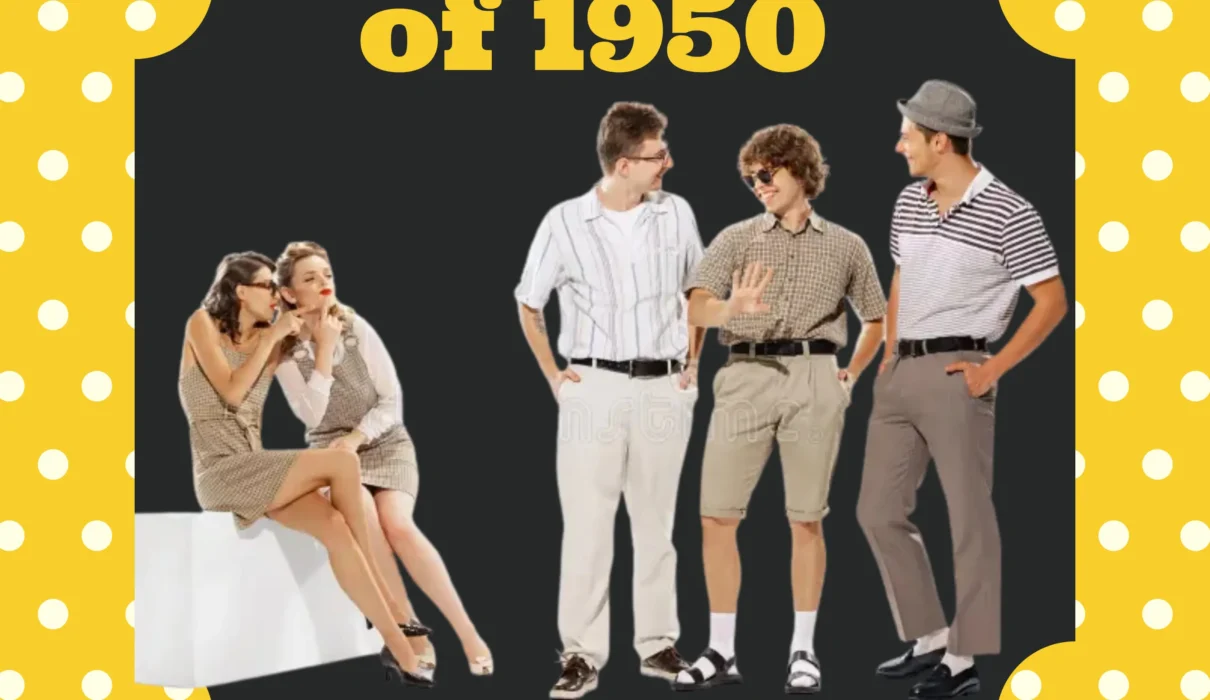
By Walk into any vintage boutique in America and you’ll notice something. The 1950s fashion section always draws the longest look. People stop. They touch the fabric. They hold pieces up and imagine.
There’s a reason for that. No other decade produced a wardrobe so clear in its intentions, so confident in its proportions, and so deeply tied to a specific American mood. I’ve studied fashion history for years and the 1950s fashion remain the most requested era for style recreation requests I receive.
This guide covers the full picture. You’ll learn what made this era so distinctive, how 1950s women’s fashion and 1950s mens fashion each evolved across the decade, which icons defined the looks, what mistakes people make when recreating the style, and twelve practical ways to wear it authentically right now.
What Made the 1950s a Golden Age for American Style
The United States emerged from World War II with something the country had been missing for years: economic confidence. Rationing ended. Factories shifted from military goods to consumer products. Families bought houses, televisions, and new clothes.
This prosperity changed how Americans dressed. Fashion stopped being about making do and started being about aspiration.
Three forces shaped the decade’s aesthetic more than anything else.
Hollywood Set the Agenda
Movie studios were at their peak influence in the early 1950s. Stars like Grace Kelly, Marilyn Monroe, Cary Grant, and Marlon Brando didn’t just act. They set the standard for how Americans wanted to look.
Studio costume departments at MGM, Paramount, and Warner Bros. employed the greatest tailors and dressmakers in the world. When Grace Kelly wore a fitted coat dress in a film, department stores across America copied the silhouette within weeks.
According to a 2019 research paper published by the Fashion Institute of Technology, Hollywood costume influence on mainstream retail was at its historical peak between 1948 and 1962. The 1950s sat squarely at the center of that window.
Television Brought Fashion Into the Living Room
By 1955, more than 65% of American homes owned a television. Programming like The Donna Reed Show, Father Knows Best, and American Bandstand gave viewers a weekly reference point for what fashionable Americans looked like.
Dick Clark’s American Bandstand specifically shaped teen fashion from 1957 onward. Teenagers watching the show copied the outfits of the dancers they admired. Youth fashion became a distinct and powerful market for the first time in American history.
Paris Defined the Female Silhouette
Christian Dior’s New Look, launched in 1947, restructured women’s fashion globally. The padded bust, cinched waist, and full midi skirt created an hourglass profile that replaced the boxy wartime silhouette.
American designers like Claire McCardell and Anne Klein adapted Dior’s ideas for the American market. They kept the feminine proportions but added practicality and comfort that European couture sometimes lacked.
A Complete Look at 1950s Women’s Fashion
1950s women’s fashion was not one single look. It was a collection of distinct aesthetics that varied by occasion, age group, region, and cultural identity. Understanding these categories helps you dress authentically rather than reaching for the most obvious cliche.
Day Dresses and the Housewife Aesthetic
The most widely worn garment for everyday women in the 1950s was the day dress. Typically falling just below the knee, these dresses featured short or three-quarter sleeves, a defined waist, and a gently flared or A-line skirt.
Cotton prints were the dominant fabric choice: florals in spring and summer, plaids and solids in fall and winter. Wrap dresses and shirtwaist dresses offered versatility from morning housework to afternoon errands.
Brands like Simplicity and McCall’s sold millions of sewing patterns each year because many American women made their own clothing. Home sewing was practical, economical, and a genuine creative outlet.
Teen Fashion and the Poodle Skirt Era
Teenage girls in the 1950s developed a fashion identity completely separate from their mothers. The poodle skirt became the defining symbol of this youth culture: a wide circle skirt in felt fabric, typically in pink, black, or turquoise, with an appliqued poodle design near the hem.
Worn over stiff crinoline petticoats, paired with a fitted sweater and white bobby socks with saddle shoes, this look communicated youth, fun, and postwar optimism.
American Bandstand accelerated its popularity. When teenagers saw their peers wearing circle skirts on national television, the style spread from urban centers to small towns within a single television season.
Evening and Formal Wear
For evening occasions, 1950s women’s fashion reached its most dramatic expression. Strapless ball gowns with enormous skirts, often in silk, taffeta, or tulle, dominated formal events. Pastel colors ruled: blush pink, powder blue, champagne, and soft lavender.
The cocktail dress emerged as a new category specifically for this decade. Shorter than a ball gown but more formal than a day dress, the cocktail dress filled the gap between afternoon and late evening. Givenchy, Balenciaga, and American designer James Galanos defined this category.
Sportswear and the California Influence
California was developing its own contribution to American fashion throughout the 1950s. Sportswear brands from Los Angeles promoted a more relaxed aesthetic: fitted shorts, halter tops, pedal pushers, and casual knit separates.
This was the seed of what would eventually become American casual fashion. Designer Clare Potter and California brands like Catalina Sportswear gave American women permission to dress comfortably without sacrificing style.
| Occasion | Key Garments | Fabrics | Signature Accessories |
| Everyday | Shirtwaist dress, capri pants | Cotton, gingham, chambray | Headscarf, ballet flats |
| Teen Casual | Circle skirt, fitted sweater | Felt, wool, cotton | Bobby socks, saddle shoes |
| Office | Pencil skirt, blouse, cardigan | Wool, silk blends | Pearls, kitten heels |
| Cocktail | Cocktail dress, sheath style | Silk, crepe, taffeta | Gloves, clutch bag |
| Formal | Ball gown, strapless silhouette | Tulle, satin, organza | Long gloves, pearl drop earrings |
1950s Mens Fashion: Three Worlds in One Decade
1950s mens fashion tells three parallel stories. The professional man in his office suit. The young man in his college blazer. The rebel in his leather jacket. Each subculture developed a coherent visual identity, and all three remain influential today.
The Corporate Uniform
American business culture in the 1950s demanded conformity. The suit was not optional. It was the price of admission to professional life.
The decade’s business suit featured natural shoulders, a slight chest suppression, and straight-leg trousers with a medium break at the shoe. Charcoal gray and navy dominated the color palette. Brown wool suits appeared on weekends and in less formal offices.
Shirt collars were moderate in spread. Ties were wide by today’s standards, typically 3.5 to 4 inches, in solid colors, foulard prints, or regimental stripes. Collar bars and tie clips were standard tools for keeping the knot tidy throughout the workday.
Madison Avenue advertising agencies and Wall Street firms became the cultural laboratories of this look. The phrase ‘man in the gray flannel suit’ entered the American vocabulary as shorthand for corporate conformity.
The Ivy League Prep Style
Away from corporate offices, university campuses generated their own dress code. The Ivy League look balanced casualness with structure.
The foundational pieces were simple: a Brooks Brothers Oxford cloth button-down shirt, khaki or gray flannel trousers, a navy blazer with gold buttons, and penny loafers or white bucks. The look was intentionally understated. Visible effort was considered bad taste.
This aesthetic spread from Harvard, Yale, and Princeton to campuses nationwide through catalogs and campus visits. J. Press and Brooks Brothers were the defining retail voices of this movement.
The Ivy League look has never truly left American fashion. Its influence runs directly through Ralph Lauren, Tommy Hilfiger, and today’s prep revival brands like Rowing Blazers.
1950s Fashion for Guys Who Rejected the Rules
Not every young man in the 1950s wanted to look like his father. 1950s fashion for guys who identified with rock and roll, motorcycle culture, or working-class identity looked completely different.
The Greaser aesthetic built its foundation on practicality and attitude. Levi’s 501 jeans, a plain white T-shirt or ribbed undershirt, a leather motorcycle jacket from Schott NYC or Harley-Davidson, and engineer boots or creepers created a look that communicated independence and physical confidence.
Marlon Brando’s costume in The Wild One (1953) and James Dean’s wardrobe in Rebel Without a Cause (1955) gave this look its cultural mythology. Suddenly the leather jacket wasn’t just workwear. It was a statement.
The hair completed the message. The ducktail, also called the D.A., required pomade and a comb. Brylcreem and Murray’s Pomade were the dominant products. This grooming ritual became its own subculture ritual.
| Style Tribe | Signature Look | Key Brands | Cultural Touchstone |
| Corporate | Gray flannel suit, white shirt, tie | Hart Schaffner Marx | Mad Men, Wall Street culture |
| Ivy League | Oxford shirt, khakis, blazer, loafers | Brooks Brothers, J. Press | Preppy Handbook, campus life |
| Greaser | Leather jacket, white tee, dark jeans | Schott NYC, Levi’s | The Wild One, Rebel Without a Cause |
| Casual Weekend | Polo shirt, chinos, loafers | Lacoste, Catalina | Suburban backyard culture |
Colors, Patterns, and Accessories That Defined the Decade
The 1950s Color Story
The decade’s color palette reflected its optimism. After years of wartime drabness, Americans embraced color with enthusiasm.
Women’s fashion favored pastels in the early 1950s: blush pink, sky blue, mint green, and buttercup yellow. By mid-decade, bolder choices appeared: cherry red, emerald green, and strong turquoise. Black and white combinations carried sophisticated undertones across the entire decade.
Men’s fashion stayed more restrained. Gray, navy, brown, and olive dominated professional and casual wear. Color appeared in accessories: a burgundy tie, a yellow pocket square, argyle socks in multiple tones.
Prints and Patterns
Women’s garments featured polka dots at virtually every scale. Small dots on blouses. Large dots on full skirts. Gingham checks were summer staples. Floral prints ranged from delicate sprigs on cotton blouses to bold tropical patterns on California sportswear.
Men’s fabrics introduced subtle texture through Prince of Wales checks, glen plaids, and seersucker for summer suits. The goal was visual interest without the appearance of trying too hard.
Accessories as Finishing Statements
The 1950s treated accessories as required punctuation, not optional decoration. Leaving the house without the right finishing touches was considered careless.
- Cat-eye glasses and sunglasses with upswept corners framed the female face
- White cotton gloves were standard for daytime outings and church
- Structured handbags in leather or patent leather matched the shoe color
- Costume jewelry sets: matching clip-on earrings, necklaces, and bracelets from Trifari, Miriam Haskell, and Monet
- Silk scarves worn as headbands, neck ties, or bag accessories
- Men’s fedoras from Stetson or Dobbs completed business and casual looks
- Ray-Ban Wayfarers debuted in 1956 and immediately entered the male casual wardrobe
12 Ways to Wear 1950s Style Authentically Today
The challenge with vintage-inspired dressing is avoiding the costume effect. These twelve approaches let you channel the decade with confidence in a modern context.
For Women
- Pair a high-waisted full skirt in a solid color with a tucked-in fitted top and simple block-heel shoes for a polished daytime look
- Wear a classic sheath dress in black or navy with pointed-toe flats and a single strand of pearls for effortless workplace elegance
- Combine a vintage-style scarf tied at the neck with tailored wide-leg trousers and a fitted blouse for a French-influenced 1950s look
- Style a polka-dot wrap dress with wedge sandals and a structured straw tote for a summer look that reads vintage without feeling costume-like
- Layer a fitted cardigan over a cotton shirtwaist dress and add ballet flats for an accessible everyday approach to the decade’s signature silhouette
- Choose one bold accessory such as cat-eye sunglasses or a structured box bag and build a neutral modern outfit around it
For Men
- Wear slim-cut dark chinos with a tucked Oxford shirt, a knit tie, and loafers for a refined Ivy League reference that works in any smart-casual context
- Pair a fitted white T-shirt with well-cut dark denim jeans and clean white leather sneakers for a modern take on the greaser foundation that avoids cliche
- Style a lightweight wool blazer in charcoal over an open-collar dress shirt with tapered trousers for a 1950s office aesthetic adapted for today
- Wear a vintage-style bowling shirt with straight-cut chinos and suede loafers for a casual weekend look with clear decade references
- Invest in a quality leather jacket from Schott NYC and wear it over a simple crewneck sweater and dark trousers for authentic edge without costume energy
- Use accessories to signal the era without committing fully: a tie clip on a slim tie, a Stetson-style felt hat, or a pocket square adds decade flavor to any suit
My practical experience tells me that proportion is the entire game. The 1950s silhouette depends on waist definition for women and structured shoulders for men. Get those proportions right and almost any color or fabric reads as period-appropriate.
Where to Find Authentic 1950s-Inspired Clothing Today
| Category | Recommended Sources | What to Look For |
| Women’s Vintage Repro | Collectif, Stop Staring!, Unique Vintage | Circle skirts, sheath dresses, full-skirt styles |
| Men’s Classic Style | Brooks Brothers, J. Press, Ralph Lauren | Oxford shirts, flannel trousers, blazers |
| Authentic Vintage | Etsy vintage shops, ThredUp, local estate sales | Original 1950s labels, wool fabrics, clean condition |
| Accessories | Ruby Lane, 1stDibs, local antique malls | Trifari jewelry, structured bags, vintage gloves |
| Men’s Greaser Style | Schott NYC, Levi’s Vintage Clothing line | Leather jackets, 501 denim, engineer boots |
Mistakes That Make 1950s Outfits Look Like Costumes
Mistake 1: Stacking Too Many Signature Pieces at Once
Wearing a poodle skirt, crinoline, bobby socks, saddle shoes, and a poodle print sweater simultaneously is a Halloween costume. Real 1950s dressing was not theatrical. Choose one or two signature pieces and let them lead. Keep the rest clean and modern.
Mistake 2: Ignoring the Understructure
The full skirts of the 1950s relied on crinolines and petticoats to achieve their shape. Without the right understructure, a circle skirt falls flat and loses the entire silhouette. A single layer nylon crinoline costs under $30 and completely transforms how the garment looks and moves.
Mistake 3: Wearing the Wrong Shoes
Shoe proportion changes everything. A full circle skirt with chunky platform sneakers looks absurd. The correct heel height for 1950s women’s silhouettes is kitten heel (1.5 to 2 inches) or a modest block heel. Saddle shoes and ballet flats work for casual looks. Men pairing a formal 1950s suit with athletic shoes immediately break the aesthetic logic.
Mistake 4: Choosing Synthetic Fabrics
Polyester knit circle skirts photograph poorly and move without shape. The 1950s silhouette depends on structured fabrics: cotton, wool, taffeta, or quality blends. When thrifting or shopping reproductions, feel the fabric before buying. If it’s thin and slippery, it will undermine the look regardless of the silhouette.
Mistake 5: Skipping Period-Appropriate Hair
Hair is not optional in vintage styling. The outfit exists in conversation with the hairstyle. Women don’t need elaborate pin curls or victory rolls for everyday 1950s-inspired dressing. A simple set wave, clean bouffant, or high ponytail with a silk scarf already shifts the register significantly. Men’s side parts and neat grooming complete the Ivy or corporate looks in ways no clothing piece can substitute.
Pro Tips From Someone Who Studies This Era Seriously
- Visit the archives: The FIDM Museum in Los Angeles and the Kent State University Museum both maintain significant 1950s costume collections with public access programs
- Study primary sources before shopping: Life magazine issues from 1950 to 1959 are available digitally and show exactly what real Americans wore in every region and income level
- Get one garment tailored: A single well-fitted vintage piece teaches you more about 1950s proportion than a wardrobe full of approximate sizes
- Learn to identify authentic vintage labels: Look for union labels (ILGWU or ACWA), early care instruction labels introduced after 1960, and fabric content labels mandated from 1960 onward to help date pieces accurately
- Build around a specific reference: Choose one style tribe (Ivy League, Greaser, New Look feminine, California sportswear) and dress coherently within it rather than mixing across subcultures
- Don’t overlook menswear for women: 1950s-era men’s Oxford shirts, slim ties worn as belts, and tailored trousers all work beautifully in contemporary women’s styling with vintage inspiration
Going Deeper: Primary Archive Research
The best fashion history research goes straight to original sources. Published histories and style guides interpret primary materials, but nothing replaces looking at actual garments.
The Victoria and Albert Museum in London maintains one of the world’s most comprehensive 20th-century fashion collections, including significant American and European holdings from the 1950s. Their online database includes high-resolution photographs of original garments with detailed construction notes.
You can search and browse their fashion collection directly through the Victoria and Albert Museum Fashion Collection online database. It’s the single best free research resource for anyone serious about understanding authentic 1950s construction, fabrics, and silhouettes.
Related Style Guides on Our Site
If this guide helped you understand the decade better, these related articles build on what you’ve learned here:
- 1940s American fashion: The wartime utility aesthetic that shaped postwar style
- 1960s fashion revolution: How mod culture dismantled everything the 1950s built
- The complete vintage shopping guide: How to find, date, and price authentic pieces
- Grace Kelly style guide: Recreating the decade’s most elegant wardrobe today
- The history of American denim: From workwear to Levi’s cultural dominance
- How to style vintage accessories with modern outfits without looking dated
Each of these guides expands on specific threads introduced in this overview. Understanding adjacent decades gives you the sharpest eye for what makes the 1950s specific and irreplaceable.
Frequently Asked Questions
1. What is the most iconic clothing item from 1950s fashion?
For women, the poodle skirt is the single most recognized garment from the decade. A wide circle skirt in felt fabric, typically worn over crinoline petticoats with a fitted sweater and saddle shoes, it became the defining image of American teenage fashion in the 1950s. For men, the gray flannel suit holds the equivalent cultural weight. It symbolized postwar American professionalism and appeared so frequently in the culture that novelist Sloan Wilson used it as the title and central metaphor of his 1955 novel about corporate conformity. Both garments communicate the decade’s core tension between conformity and emerging youth identity.
2. How was 1950s women’s fashion different from 1940s fashion?
1940s women’s fashion was shaped by wartime fabric rationing, which produced narrower skirts, shorter hemlines, and boxy silhouettes designed to conserve material. When Christian Dior introduced the New Look in 1947, it was a direct rejection of wartime constraint. The 1950s built on Dior’s vision: full skirts requiring yards of fabric, nipped waists emphasizing the female figure, padded busts, and soft rounded shoulders. The change was both physical and psychological. Women were encouraged to embrace femininity and abundance after years of making do. American designers like Claire McCardell added sportswear practicality to these European-influenced silhouettes, creating a distinctly American version of 1950s feminine style.
3. What did teenagers wear in the 1950s?
Teenage fashion in the 1950s split clearly between two camps. Girls who followed mainstream teen trends wore circle skirts or poodle skirts over crinoline petticoats, fitted crew-neck or cardigan sweaters, bobby socks, and saddle shoes or white canvas sneakers. Hair was typically worn in a high ponytail or with a bouffant. Girls who identified with rock and roll culture wore tighter skirts, off-the-shoulder tops, and more dramatic makeup. For teenage boys, the divide was equally sharp. The conventional teen wore pressed khakis, a button-down shirt, and loafers. Boys drawn to greaser or rock culture wore Levi’s jeans, white T-shirts, leather jackets, and styled their hair into ducktail or pompadour shapes using Brylcreem or Murray’s pomade.
4. How do I dress in 1950s style without looking like I’m in a costume?
The key to wearing 1950s-inspired style without a costume effect is selective application and proportion. Choose one or two signature elements from the decade rather than committing to every detail at once. A high-waisted full skirt with a modern fitted top and clean shoes reads as vintage-inspired. The same skirt worn with saddle shoes, bobby socks, and a poodle print sweater reads as costume. For men, a well-fitted Oxford shirt with tailored trousers and penny loafers channels the Ivy League aesthetic without theatrical commitment. Focus on silhouette and fit above all else. The 1950s were built on precise proportions. Get the waist placement, skirt volume, and shoulder line right and almost any individual piece will read as period-appropriate rather than costumey.